Financial Planning for Business Owners: It's Not a Math Problem
Most money problems aren't math problems. Chad Hufford explains why a plan, a strong savings rate, and margin matter more than chasing returns.

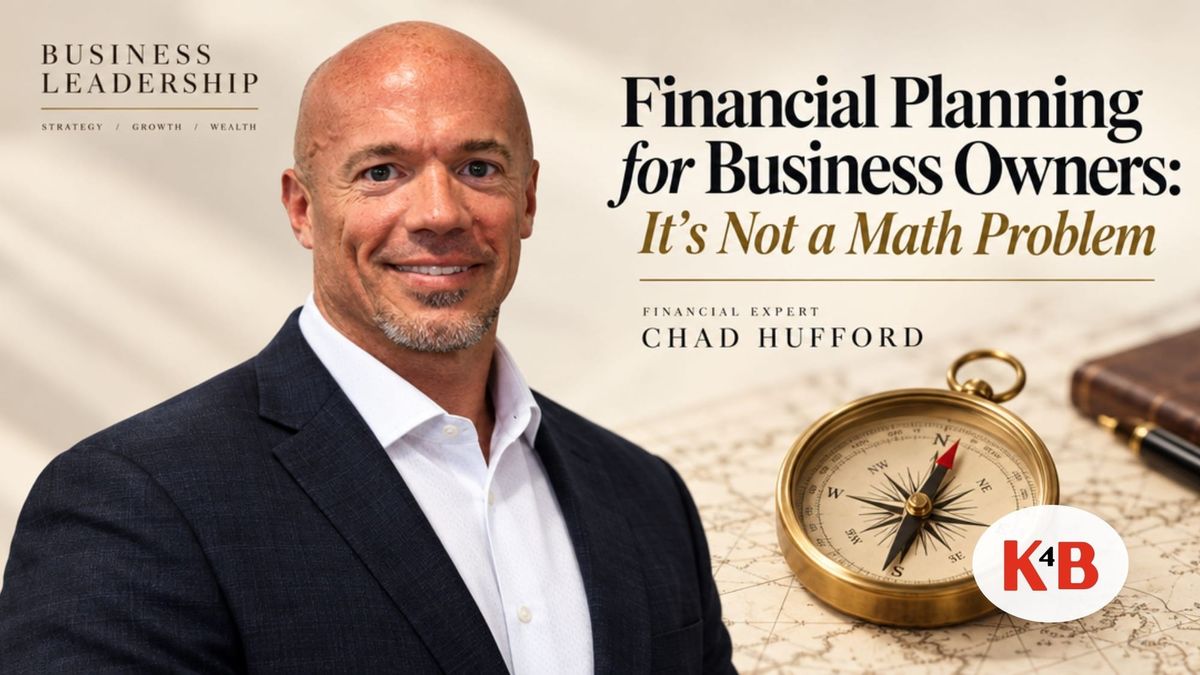
Host: Bernie Franzgrote
Financial planning for business owners starts with behavior, not math. Chad Hufford shares lessons on plans, savings rate, and margin on Knack 4 Business.
GROWTH CATEGORY: Real Estate & Wealth Building
Brought to you by Gentry Learning, Profit10™, and Web Indexer.

Fred Crouch's real estate education hub, with Listings, an Investor Club, and a free newsletter.
You work hard. You pay everyone else first. And you still can't say your own future is secure.
That feeling is more common than you think, and it isn't about effort. Chad Hufford has spent 20 years helping families and business owners trade that confusion for a plan.
Chad Hufford is the founder of Veritas Wealth Management in Anchorage, Alaska, a financial planning firm that serves several hundred families across the US. In this episode of Knack 4 Business, Chad explains why most money problems are behavior problems, not math problems. He shares why a plan matters more than a portfolio, why gold is a price bet, and why debt works like an accelerant. He also talks about his book, Forging Financial Freedom, and his Blue Collar Millionaire show.
Watch the full conversation here:
Many business owners work hard but still doubt their financial future. Chad Hufford, founder of Veritas Wealth Management and a Dave Ramsey Smart Investor Pro, says most money problems come from behavior, not math. Readers learn why a clear plan, a high savings rate, and living with margin matter more than chasing returns.
Who this is for
SMB owners, solopreneurs, and leaders building systems, plus anyone who works hard and wants a real plan.
Key lessons
1. Most money problems are behavior problems. People know what to do, but they trade the future for today. Chad pointed to a fast-food line wrapping around a parking lot. Nobody pulls in thinking it's a great life decision.
2. There is no portfolio without a plan. Chad compares it to building a house. You'd never start without a blueprint. His first meetings are about where you want to be in 10, 20, or 30 years, not about investments.
3. Savings rate and margin beat return rate. A neighbour who invests 10 to 20 percent of every paycheque will likely beat you, even with weaker investments. Margin matters too. Many of us max out our credit cards, our calendars, and our waistlines, then wonder why life feels tight.
Practical steps
- Write down the monthly income you'd need to live comfortably, in today's dollars. Don't worry where it comes from. Just pick the number.
- Check your savings rate. How much of each paycheque goes into investing? Chad's example was 10 to 20 percent.
- Find one place you have no margin: money, calendar, or health. Free up a little this week.
About the guest
Chad Hufford is the founder of Veritas Wealth Management and the author of Forging Financial Freedom. Connect: LinkedIn · Facebook · Instagram · YouTube
Thanks to Noémi Beres of Podcast Connections for introducing Chad.
Listen on audio
Partners on this episode
Gentry Learning: Fred Crouch's real estate education hub, with Listings, an Investor Club, and a free newsletter.
Profit10™: a free Profit Snapshot. Ten questions show where your business leaks profit.
Web Indexer: a quick-install chatbot that answers visitor questions 24/7.
FAQ
Is gold a good investment?
Chad's test is whether it can produce income while you hold it. Gold doesn't, so he calls it a price bet. He's fine with a small amount if it helps you stay invested elsewhere.
Why does debt get people in trouble?
Debt is an accelerant. It speeds you up when things go well. When things go wrong, it gets you into trouble faster.
When should a business owner start financial planning?
Now. Chad uses a proverb: the best time to plant a tree was 20 years ago, and the next best time is today. It helps whether the business is thriving or struggling.
- Join Canada Growth Network: $47 CDN, a robust CRM plus community
- Web Indexer: quick-install chatbot, info 24/7 for visitors. Install it today.
- Browse all episodes (K4B / ETW / CGN)
- Search K4B episodes by topic: this uses that Web Indexer!
- Want to be a guest? Register here
K4B acknowledgements
Carl Richards · Fred Crouch · Jovan Strika, @Hive · Melanie Webber