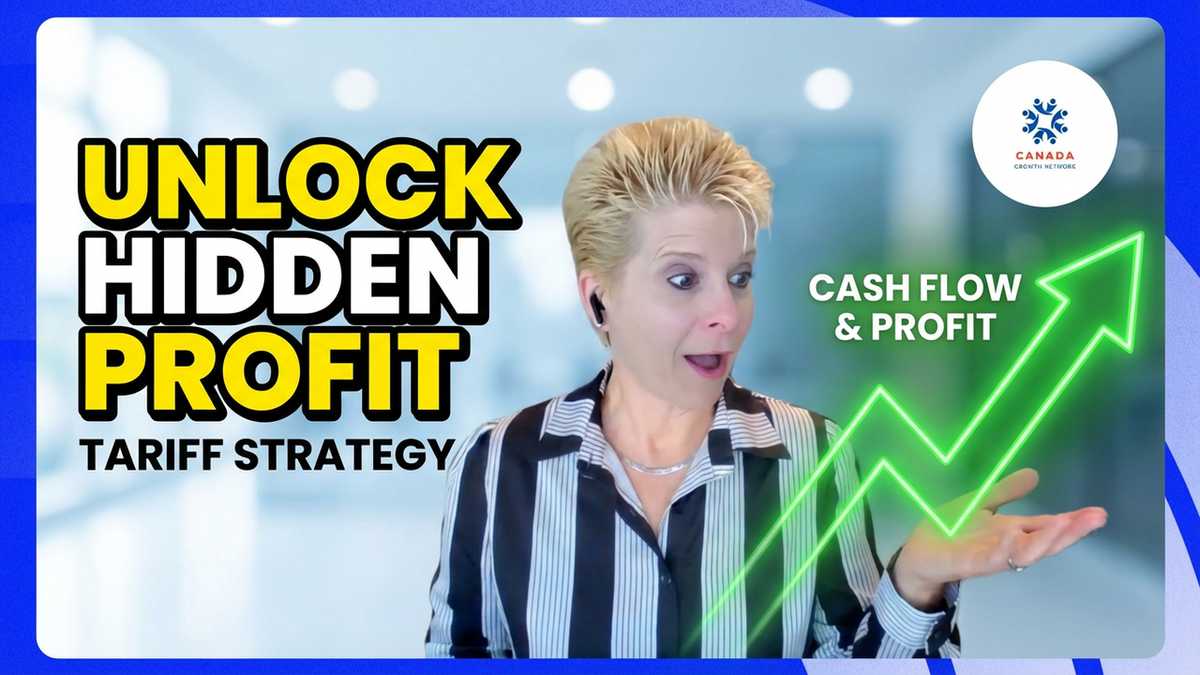
Tariffs Aren't Killing Profitability. Your Decisions Are!
Tariff profitability strategy matters more than tariff rates. Learn how USMCA compliance mistakes quietly reduce revenue.

Your hosts Bernie Franzgrote, Percy Barr and Wayne Pratt
Learn tariff profitability strategy insights on the Knack 4 Business podcast to protect revenue and cash flow in Canada–U.S. trade.
Growth Category: Sales & Revenue
Many business owners blame tariffs for lost revenue.
But what if the real problem is not the tariff rate — it’s the decisions behind it?
On the Knack 4 Business podcast, Karena Bell, Founder of ProfitLinz, explains why tariff profitability strategy matters more than politics.
She shares practical ways small and mid-sized businesses can protect revenue, margin, and cash flow.
Who This Episode Is For
- SMB owners 3–10 years in
- Solopreneurs importing goods
- Corporate escapees building product businesses
- Leaders building systems for growth
- Companies operating between Canada and the U.S.
KEY LESSONS
Takeaway 1 – Tariffs Are a Revenue Strategy Issue
Tariffs do not just raise costs. They change your entire revenue structure.
When duties increase, landed costs rise immediately. Pricing adjustments usually lag. That gap compresses margin and slowly eats revenue. If no one models the impact, profit drops quietly.
Example: A 5% duty increase can reduce net margin far more than 5% if pricing is not adjusted fast enough.
Takeaway 2 – USMCA Compliance Mistakes Drain Cash
Many companies overpay duties by 20–40%.
Why?
Wrong HS codes.
Missed USMCA qualifications.
Conservative classifications.
Duties are paid before revenue is collected. That extends the cash conversion cycle and strains working capital. Cash flow stress appears before the income statement shows damage.
Takeaway 3 – Brokers Don’t Optimize for Profit
Customs brokers focus on compliance. They ensure goods cross borders legally.
They are not responsible for revenue optimization.
Leadership must own tariff profitability strategy. That means reviewing classifications, checking documentation, and modeling “what-if” scenarios before volatility hits.
PRACTICAL STEPS
Here are three actions you can take this week:
- Review your HS classifications from the past two years.
- Confirm your products qualify under USMCA where applicable.
- Model how a 5% tariff change would affect EBITDA and cash flow.
Small reviews can uncover large revenue leaks.
ABOUT THE GUEST
Karena Bell is the Founder of ProfitLinz.
She helps leadership teams protect margin and working capital when revenue growth does not match profit performance.
Her focus is simple: create structural visibility so businesses stop unintentionally financing overpayments.
She believes tariff strategy is not political. It is operational.
Complimentary tariff assessment on the ProfitLinz website at!
LISTEN ON AUDIO
Listen to the Knack 4 Business podcast
More Knack 4 Business episodes + chat bot to search past episodes
Listen to the full episode.
Then ask yourself:
Have we reviewed our tariff profitability strategy this year?
Visit the Knack 4 Business page.
Ask us about the Canada Growth Network.
You can reach us at: info@kreativinsight.com
Learn more about Canada Growth Network here:
Sponsor
Gentry Learning – Leadership in Real Estate investing that builds results.
Property Wizard – Podcast about that simplifies real estate investing decisions.
FAQ
What is tariff profitability strategy?
Tariff profitability strategy means managing duties, classifications, and compliance to protect revenue and margin. It focuses on decision-making, not just rates.
How do USMCA compliance mistakes affect revenue?
Incorrect classifications or missed qualifications can cause overpayments. Duties reduce cash flow before revenue is collected.
Why should leaders review HS codes?
HS codes determine duty rates. If they are wrong, companies may overpay for years without noticing.