Tech Audit First. AI Second. Here's Why | Chris Bryce
Most SMBs don't have a tool problem, they have a system problem. Chris Bryce of DotFusion breaks down how to audit your tech stack and build AI that actually works for you.

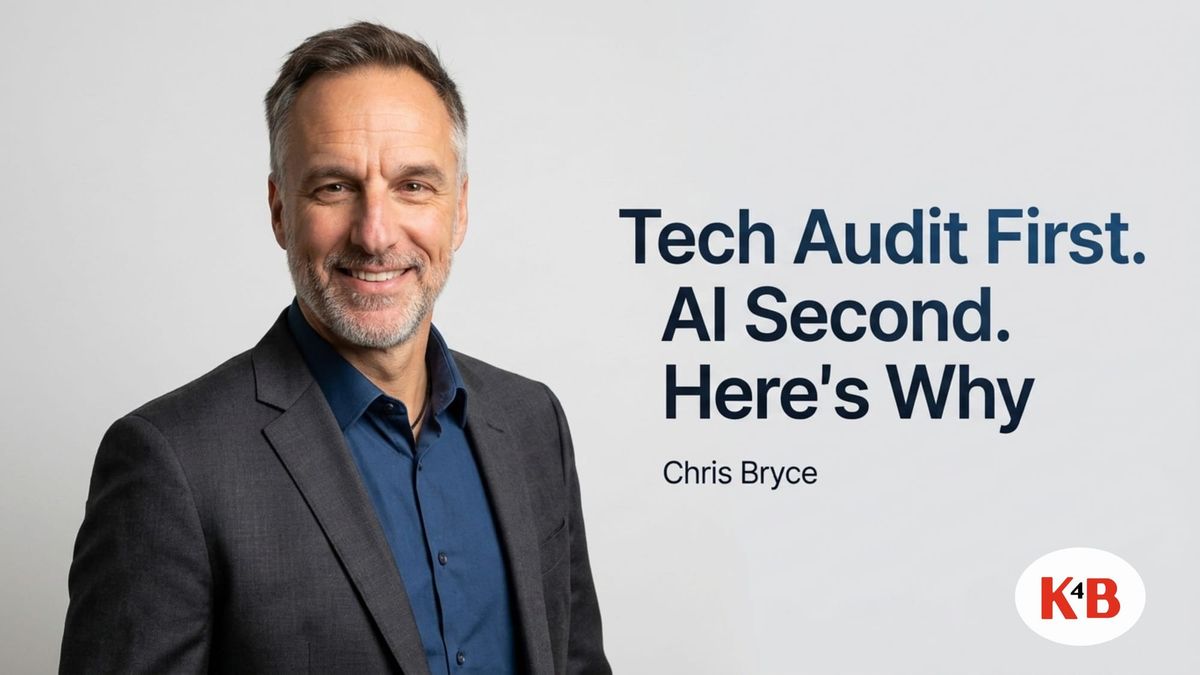
Host: Bernie Franzgrote
Chris Bryce of DotFusion explains why most SMBs have a system problem, not a tool problem — and how to fix it before adding more AI.
GROWTH CATEGORY: AI & Automation
Brought to you by Gentry Learning, Canada Growth Network, and Sterling Grace Technologies.

Real estate education that builds real wealth, with Fred Crouch and the Property Wizard Podcast.
You're paying for tools that aren't doing the job. Most SMB owners know it. Few stop long enough to do anything about it.
Chris Bryce has spent over 20 years helping organizations like Cirque du Soleil, Intuit Canada, and Brookfield Properties build digital platforms that actually hold up. He walks into tech stacks that look busy and asks one question: is this solving a system problem, or just adding another thing to manage?
The answer changes everything.
Watch the full conversation here:
ANSWER CAPSULE
Most SMBs don't have a tool problem — they have a system problem. Chris Bryce, CEO of DotFusion and 20-year digital transformation expert, explains how to audit your tech stack, evaluate vibe coding and agentic AI, and build systems that scale without adding more noise.
WHO THIS IS FOR
SMB owners / Solopreneurs / Growing teams / Leaders building systems
Key Lessons
1. Fix the system before you fix the stack.
Chris made this clear early: most businesses reach for a new tool when the real issue is the workflow underneath. A CRM doesn't fix a broken follow-up process. A content platform doesn't fix an unclear message. Before you add anything, map what you're actually trying to repeat — and ask whether your current tools help or hinder that repetition. Chris's team runs a quarterly AI audit for exactly this reason. They ask every department: what are you using, what do you wish you had, and what's making you nervous? The answers shape the next 90 days.
2. Vibe coding is a sandbox, not a shortcut.
Vibe coding platforms let anyone describe an app idea in plain language and get a working prototype in hours. Chris built a sailing course curriculum tool in an afternoon. That's real. But he was also clear about the limit — vibe coded products are black boxes. A developer can't easily get in and extend them, which makes them hard to scale with a team. Use vibe coding to test an idea, validate a concept, or get 75% of the way there. Just don't mistake the prototype for the product.
3. AI as a partner means AI that pushes back.
Chris shared a moment that stuck. His team programmed their AI marketing suite with their ICP, their financial goals, and their three-to-five year strategy. One day he went to comment on a friend's LinkedIn post — a personal coaching business. The AI flagged it. Wrong audience. No alignment with company goals. Don't post there. That was the first time, he said, that AI felt like a genuine partner rather than a yes-machine. That's the target. Not AI that does whatever you ask — AI that holds you to what you said you were building.
Practical Steps
1. Run a one-page tech audit this week.
List every tool you're paying for. Next to each one, write one sentence: what system problem does this solve? If you can't answer that in one sentence, it's a candidate to cut. Chris's team does this quarterly — not annually. The market moves too fast for a yearly review to mean anything.
2. Try vibe coding something small.
Pick one repetitive task or internal tool idea and spend an afternoon in Replit or Bolt. Don't worry about the output being perfect. The point is to understand the capability — what it can do, where it breaks, and whether it belongs in your workflow. You can't make a smart platform decision without knowing what the tools actually feel like to use.
3. Build a 90-day decision cycle for your stack.
Create a shared channel — Slack, email thread, wherever your team lives — called something like "AI Ideas." Anyone can drop a tool recommendation there. Nothing gets adopted outside the 90-day review window. This keeps the team from chasing shiny things while still making sure good ideas don't get lost. Chris's team runs on this rhythm at DotFusion, and it's kept their stack lean without leaving them behind.
About the Guest
Chris Bryce is the CEO of DotFusion and Crew CMS, a certified B Corp with teams in Canada and Cambodia. He's spent over 20 years guiding organizations through digital transformation — from Cirque du Soleil and Intuit Canada to Mitsubishi and Brookfield Properties. His work sits at the intersection of strategy and execution, with a focus on AI-driven automation, digital modernization, and human-centered platform design. He also hosts Beyond the CMS, a podcast for people working in content operations, and writes about sailing adventures at Gnarly Spoke.
Connect with Chris: LinkedIn | DotFusion | Instagram
Listen on Audio
Listen on Simplecast
Browse all episodes
Partners on this episode
Gentry Learning — Real estate education that builds real wealth, with Fred Crouch and the Property Wizard Podcast.
Canada Growth Network — A business community with a full CRM suite built in. $47 CAD/month. Real tools. Real people.
Sterling Grace Technologies — Cybersecurity, IT support, and business continuity for Canadian SMBs.
FAQ
Q: What is vibe coding and should my business try it?
Vibe coding is a way to build a working app or tool by describing what you want in plain language — no coding required. It's worth trying if you have an idea for an internal tool or want to prototype something fast. Just know that the output is hard for a team to extend, so treat it as a starting point, not a finished product.
Q: How do I know when it's time to change my tech stack?
Ask one question about each tool: does this make my core system easier to repeat? If the answer is no — or if you can't remember why you signed up — it's worth cutting. Run this audit quarterly, not annually. The market moves too fast for a yearly review to catch the drift.
Q: What's the difference between AI as an assistant and AI as a business partner?
An assistant does what you ask. A partner holds you to what you said you were trying to build. The difference shows up when your AI pushes back — flags a post that doesn't match your ICP, or tells you a tool won't help your system. If your AI never disagrees with you, it's probably not dialled in to your actual goals.
- Join Canada Growth Network — $47 CDN, a full CRM + community
- Web Indexer — Quick install chatbot. Info 24/7 for visitors
- Browse all episodes (K4B / ETW / CGN)
- Search K4B episodes by topic
- Want to be a guest? Register here