Why Smart Contracts Are Replacing Traditional Deals – K4B with Neil Williams
Neil Williams, COO of ElastaLink, breaks down tokenization and smart contracts in plain language. Here is what every entrepreneur needs to know about the future of digital finance.

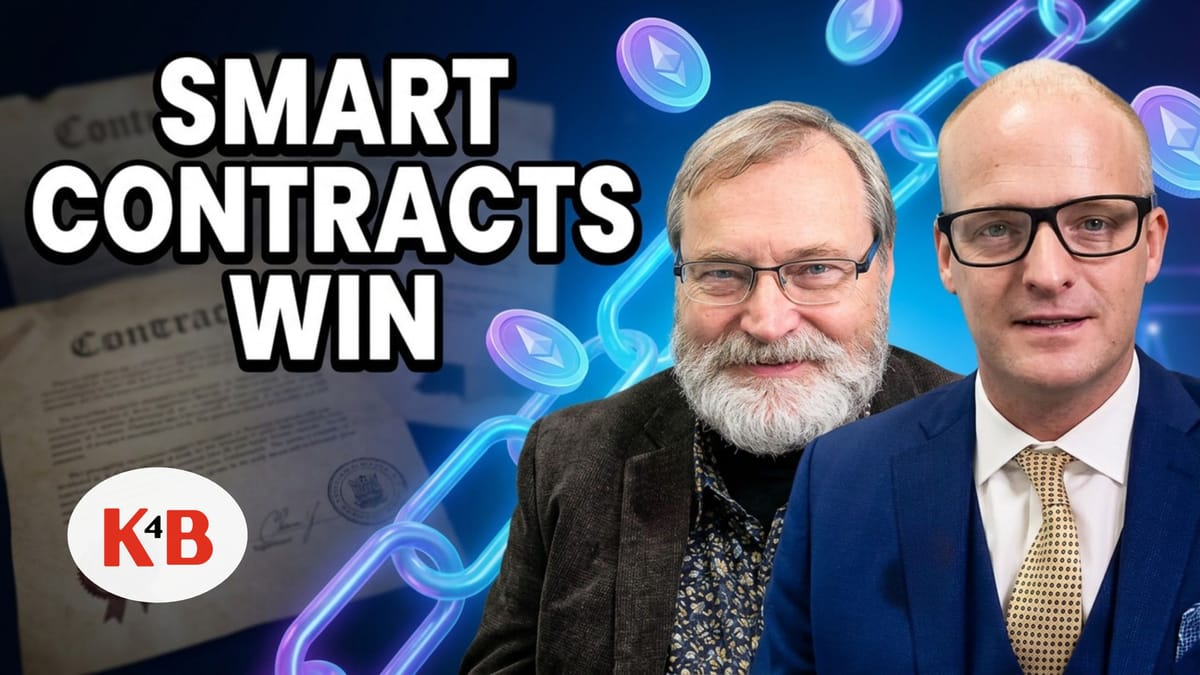
Host: Bernie Franzgrote
Neil Williams of ElastaLink breaks down tokenization, blockchain, and smart contracts for entrepreneurs on Knack 4 Business Season 4 Episode 039.
GROWTH CATEGORY: AI & Automation
Most entrepreneurs hear "blockchain" and assume it is not for them.
Neil Williams heard that assumption — and built a career proving it wrong.
As COO of ElastaLink and adjunct professor at two Ottawa universities, Neil has spent years translating complex financial technology into practical business strategy. In this episode of Knack 4 Business, he does exactly that.
Watch the full conversation here:
Who This Is For
SMB owners / Solopreneurs / Investors / Corporate escapees / Leaders building systems
Key Lessons
1. Tokenization is a business tool — not a tech experiment
A token converts ownership rights to a real-world asset into a digital format held on a blockchain. The legal weight is identical to a paper contract. The difference is speed, reach, and efficiency. Neil explains that the token represents the agreement — and that agreement is enforced automatically through smart contract infrastructure. Businesses using tokenization are not bypassing the rules. They are operating within them, faster.
2. The blockchain cannot be altered — and that is the point
Traditional ledgers can be changed. A blockchain ledger cannot. Every transaction is recorded simultaneously across multiple locations. That immutability is what makes it trustworthy at an institutional level. Neil uses a simple analogy: think of it as a contract sent via email — except once it is sent, no one can change the original. That single feature is why regulators moved faster than expected to approve this infrastructure.
3. Fractional ownership changes who gets to invest
Before tokenization, accessing certain asset classes — private equity, real estate funds, institutional bonds — required significant capital. Tokenization breaks those assets into smaller, transferable units. A smaller investor can now buy a fraction of a building or a fund with far less capital than before. Neil points to this as one of the most significant democratizing forces in modern finance — and it is already happening at scale.
Practical Steps
- Research before you invest. Check the regulatory framework in the region you are exploring. Look for companies that are transparent about compliance documentation — KYC, AML, and accreditation standards.
- Start small. Neil's advice is direct: if you are new to this space, start with a smaller position. Build knowledge first. Use that early experience to validate the platform, the asset class, and the legal structure before committing more capital.
- Consult a specialist. A lawyer who understands digital asset law is worth the investment. Financial institutions are already entering this space. Getting qualified guidance now puts you ahead of the curve — not behind it.
About the Guest
Neil Williams, BA, MBA is the Chief Operating Officer of ElastaLink — a company driving innovation in AI, machine learning, blockchain, and fintech. He is also a strategic advisor for Raze Fintech, a platform specializing in the tokenization of real-world assets for corporations and funds in regulated jurisdictions.
Neil helps entrepreneurs and institutions understand how to use digital finance infrastructure to raise capital, expand globally, and move faster than traditional systems allow. He brings the same practical framework to his classrooms at the University of Ottawa and Carleton University, where he teaches entrepreneurship, international trade, and digital business strategy.
Listen on Audio
Listen to this episode on Simplecast
Browse all Knack 4 Business episodes
- Listen now
- Comment on the Knack 4 Business LinkedIn page
- Visit Knack 4 Business
- Web Indexer — find K4B episodes faster and book a meeting
- Join Canada Growth Network — full GHL CRM + community. $1 CAD first month. $47 CAD/month. No lock-in.
- Gentry Learning — real estate investing platform
- Property Wizard podcast by Gentry Learning
- Subscribe to the K4B blog — episode recaps and business insights delivered free
- Search K4B episodes by topic — press the ? on the K4B site to use the chatbot
- Want to be a guest on Knack 4 Business? Register on the K4B website
FAQ
What is the difference between tokenization and cryptocurrency? Cryptocurrency is a digital currency. Tokenization converts ownership of a real-world asset — property, shares, a fund — into a digital token. The token represents a legal claim to that asset. They use similar underlying technology but serve very different purposes.
Is tokenization regulated? Yes. Neil is clear on this point. Modern tokenization operates within the same regulatory frameworks as traditional financial markets — KYC, AML, and accreditation requirements apply. It is enterprise-grade compliance, not the unregulated environment of early crypto markets.
How does a small business owner get started with tokenization? Start with education. Understand the asset class you are interested in and the regulatory environment in your region. Consult a lawyer who specializes in digital assets. Neil also recommends starting with a smaller investment to gain direct experience before scaling your exposure.
K4B Acknowledgements
Carl Richards — Podcast Solutions Made Simple
Fred Crouch — Property Wizard podcast
Jovan Strika — @Hive Community and Collab working space
Melanie Webber — business partner