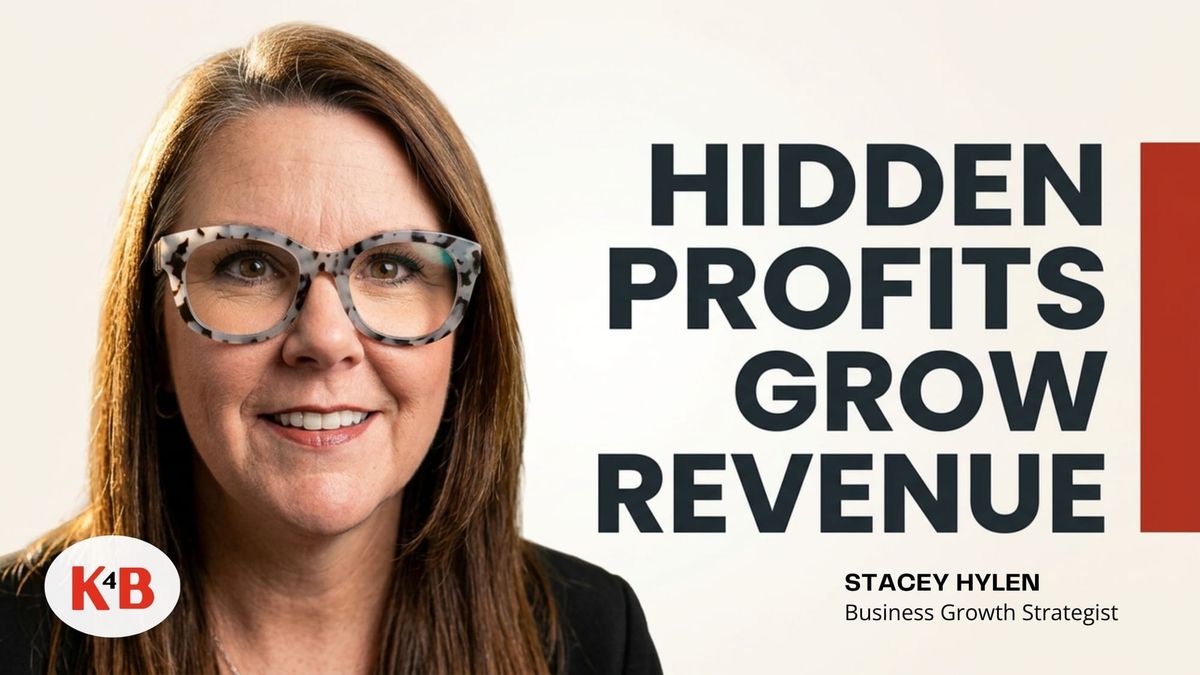
Hidden Profits: Grow Revenue Without Burnout | Stacey Hylen
Stacey Hylen on the upsell question that grew one store's sales 48% in a month. Hidden profits, the SASE method for AI, and the BS funnel that traps founders.

Hosts: Bernie Franzgrote & Wayne Pratt
Stacey Hylen on Knack 4 Business — the upsell question that grew one store's sales 48% in a month and how to find hidden profits inside your business.
GROWTH CATEGORY: Sales & Revenue
Brought to you by Canada Growth Network and WebIndexer.
Hidden Profits Strategy – Knack 4 Business with Stacey Hylen
Most business owners think growth means more ad spend. Stacey Hylen proves the opposite. She helped one small auto parts store grow sales 48% in one month — no new ads, no new staff, just one question at the register. This is how she finds revenue most owners walk past.
Watch the full conversation here:
Who This Is For
SMB owners, solopreneurs, corporate escapees, and leaders building systems who want more revenue without working longer hours.
Key Lessons
1. Hidden profits live in your existing business.
Stacey's auto parts store client couldn't cut staff or outspend the big box stores. She added one upsell question at the register — "Would you like an air filter with that oil filter?" — and his sales grew 48% in a single month. The lesson: the next ten thousand dollars is usually already in the door. Upsells, lifetime value, raised rates, and better-targeted marketing beat chasing brand-new clients.
2. The "BS funnel" is what traps most founders.
Busy work that feels productive but moves no revenue. Rewriting website copy. Redesigning the logo. Reading another book. Stacey's mentor Chris Barrow named it 20 years ago and it still describes most owners' weeks. The fix is brutal honesty about what activities actually drive ROI versus what just feels like progress.
3. Use AI with a method, not a vibe.
Most owners type "make this better" into ChatGPT and get crap out. Stacey's SASE method gives the AI a job: Strategic (what's the objective), Authentic (who's the perfect client), Stories (your real lived examples), Sell (every piece sells something — even free content), You (your unique voice, dog's name, weird hobby — all of it). Without that structure, your AI content reads like everyone else's.
Practical Steps
- Ask one upsell question at the point of sale this week. Pick your top-selling product. Pair it with something that naturally goes with it. Train the team to ask. Track results for 30 days.
- Open your ChatGPT settings and turn OFF "train the model for everyone." Most owners never check. This protects your draft copy, client details, and trade secrets from being fed back into the model.
- Pick one client from your existing book and ask what else they need. Raise the rate, add the next package, or extend the engagement. Lifetime value is the hidden profit most owners ignore.
About the Guest
Stacey Hylen is an internationally recognized business growth strategist, certified AI consultant, and former VP of Consulting for Tony Robbins and Chet Holmes Business Mastery. She was named International Coach of the Year in 2016 and is featured in Amanda Holmes' new edition of The Ultimate Sales Machine for the Dream 100 strategy. She helps established entrepreneurs find hidden profits, attract their perfect clients, and scale without burnout. Connect at staceyhylen.com or on LinkedIn.
Listen on Audio
Listen on Simplecast
Browse all episodes
Partners on this episode
- Canada Growth Network — Business connections plus CRM for $47 CAD a month. Bernie is a co-founder. Start at $1 first month.
- WebIndexer — Turn your website into a 24/7 sales assistant. See it live on knack4business.com.
FAQ
What is a "hidden profit" in a small business?
A hidden profit is revenue already inside your business that you're walking past — upsells to existing clients, raised rates, longer client lifetime, or better-targeted marketing aimed at your perfect client instead of every client.
What is the SASE method for using AI?
SASE stands for Strategic, Authentic, Stories, Sell, You. It's Stacey Hylen's framework for AI content that sounds like the owner instead of generic AI. Each letter is a layer the owner adds to the prompt or the trained model.
Why does Stacey say "I tried everything" is usually wrong?
Most owners who say "I tried everything" have tried three things twice. Real resourcefulness — Tony Robbins' point — is testing many approaches many times, not naming the absence of a few things as proof that nothing works.