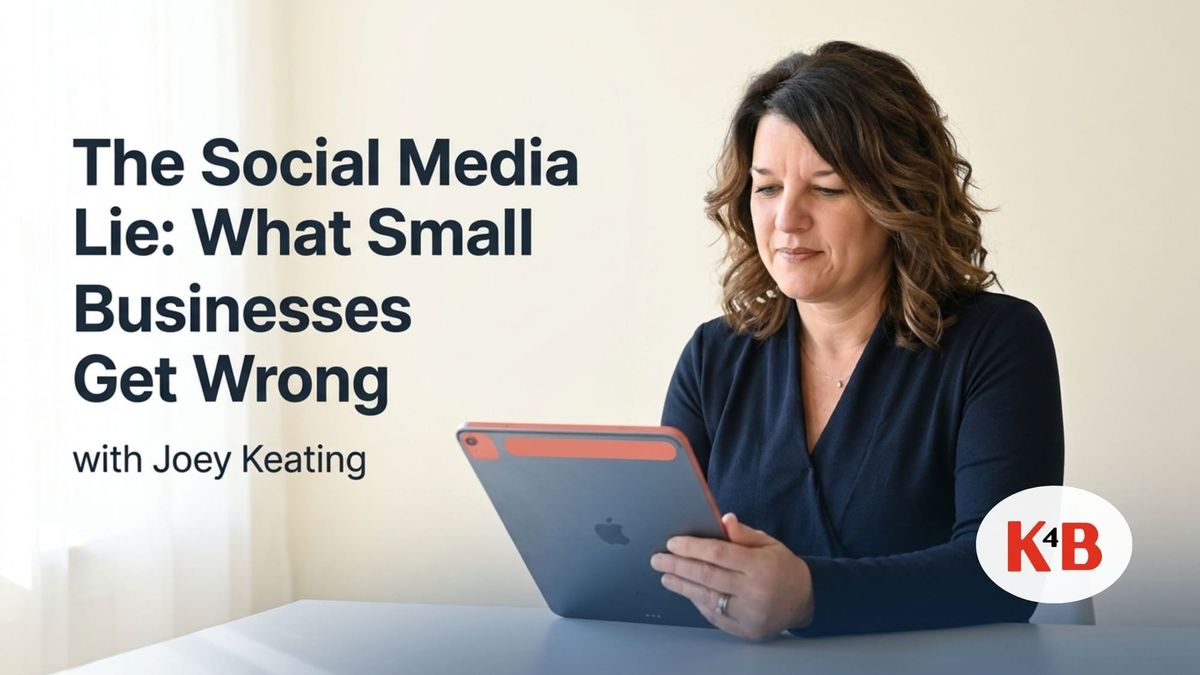
The Social Media Lie: What Small Businesses Get Wrong
Most small businesses aren't losing on social media because they post too little. They're losing because they post without a strategy. Joey Keating shows you what to fix first.

Host: Bernie Franzgrote
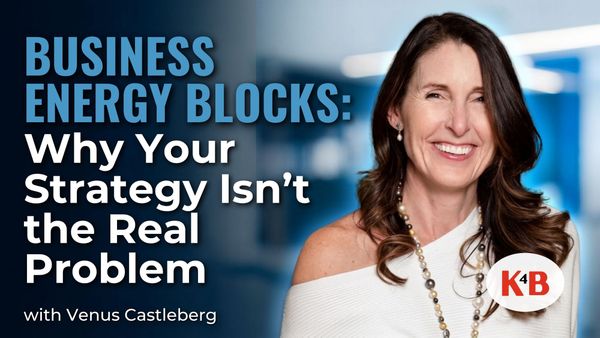
Joey Keating breaks down what human-first social media strategy actually looks like for small businesses, nonprofits, and community brands.
GROWTH CATEGORY: Marketing & Branding
Brought to you by Canada Growth Network, VidIQ, and WebIndexer.

A business community with a full CRM and automation suite built in. Real connections, real tools, $47 CAD/month.
Your social media isn't failing because you're not posting enough. It's failing because you're posting without a strategy — and measuring things that don't actually tell you if it's working.
Joey Keating has spent 15 years fixing that problem. As a former RD chemist turned social media strategist, she reads analytics the way a scientist reads data — looking for patterns, testing what works, and dropping what doesn't. She's the founder of 74 Social Media & Marketing, and she works with chambers of commerce, nonprofits, and small businesses who are tired of posting into the void.
In Season 4 Episode 124 of Knack 4 Business, Joey breaks down what human-first social media actually means in practice.
Watch the full conversation here:
ANSWER CAPSULE
Most small businesses post regularly on social media but see little growth because they're measuring the wrong things and missing a clear strategy. Joey Keating, founder of 74 Social Media & Marketing and a 15-year social media strategist, explains how to align content with real business goals. Listeners walk away knowing which metrics matter, how to build a real audience, and how to audit their full digital presence for free.
WHO THIS IS FOR
SMB owners · Solopreneurs · Nonprofit leaders · Community-focused brands · Anyone who's posting consistently but not seeing results
Key Lessons
1. Vanity metrics will mislead you every time
Follower count feels like progress. It usually isn't. What tells you something real is how many non-followers are viewing your content — that number shows whether your content is actually reaching new people or just circling your existing audience.
Joey uses a simple example: if you have 150 followers but strong views from non-followers, you're growing. If you have 10,000 followers and zero engagement, you're not building anything — you're renting attention from people who were never going to buy.
2. Strategy comes before content
Before you write a post, open a reel, or plan a campaign, you need a quarterly goal. Not a vague one. A specific outcome — grow followers, increase event attendance, generate leads, drive donations. That goal determines which metrics matter and what kind of content you create.
Without it, everything you post is a guess. With it, every pivot has a reason.
3. Your brand has a personality — whether you manage it or not
Joey told a story that stuck. A client tried to replace his voice recordings with an AI clone. She rejected it immediately — not because the technology failed, but because the personality disappeared. His cadence, his warmth, his specific way of phrasing things — that's what his audience showed up for. His own kids could identify him by voice alone while Joey edited in the next room.
The human element isn't a nice-to-have. It's the thing that scales. When you grow from solo to a team of fifty, the goal isn't to become more polished. It's to carry the personality forward.
Practical Steps
1. Pull your non-follower view data this week
Open your platform analytics and find the metric that shows views from people who don't follow you. If that number is strong, your content is reaching new audiences. If it's low, your content is staying inside your existing circle. That single number tells you more than your follower count ever will.
2. Set one quarterly social media goal tied to a business outcome
Pick one goal — not five. Tie it to something real: a fundraiser number, a consultation booked, a product sold, an event attended. Then decide which platform metrics point toward that outcome and track only those for 90 days.
3. Ask your best customers how they found you
Before you dive into Google Analytics, ask the simple question: how did you find us? You'll learn which channels are actually driving people to your door — including ones you might not be tracking. — Descript is the tool I use to edit audio and repurpose content fast if you're turning those customer conversations into content.
About the Guest
Joey Keating is the founder of 74 Social Media & Marketing, a strategy-first agency helping small businesses, nonprofits, chambers of commerce, and community-focused brands build real digital presence. With a background as an RD chemist, Joey brings data discipline and pattern recognition to social media strategy — helping clients stop guessing and start growing. She works virtually with clients across the continental US and is available at joey@74social.media or by phone/text at 1-914-365-7411.
Listen on Audio
Partners on this episode
Canada Growth Network — A business community with a full CRM and automation suite built in. Real connections, real tools, $47 CAD/month.
VidIQ — The YouTube growth tool Bernie uses on every K4B episode. Research titles, tags, and trends.
WebIndexer — A smart chatbot that turns your website into a 24/7 client-facing assistant.
(Horizontal rule)
FAQ
Q: How do I know if my social media is actually working?
Start with Google Analytics — not your platform dashboard. Look at your referral sources and see whether traffic is coming from your social channels. Then ask your new clients directly how they found you. The honest answer usually lives in that conversation, not the data.
Q: How many social media platforms should a small business be on?
Start with one — the one where your audience already lives. Get that right before you expand. A strong presence on one platform beats a weak presence on five. Once you know what content works and what your audience responds to, adding a second channel becomes a lot easier.
Q: What's the difference between building an audience and renting attention?
Renting attention is chasing follower counts, going viral, doing follow-for-follow. It looks like growth but leaves nothing behind. Building an audience means showing up consistently for a specific group of people who actually care about what you do — even if that group starts small. Seven people who buy from you are worth more than seven hundred who scroll past.
- Join Canada Growth Network — $47 CDN/month. A robust CRM + real business community
- Web Indexer — Quick-install chatbot. Info 24/7 for your website visitors
- Browse all episodes (K4B / ETW / CGN)
- Search K4B episodes by topic — powered by WebIndexer
- Want to be a guest? Register here