This Bestselling Author Thrived Because of His Autism | JD Barker
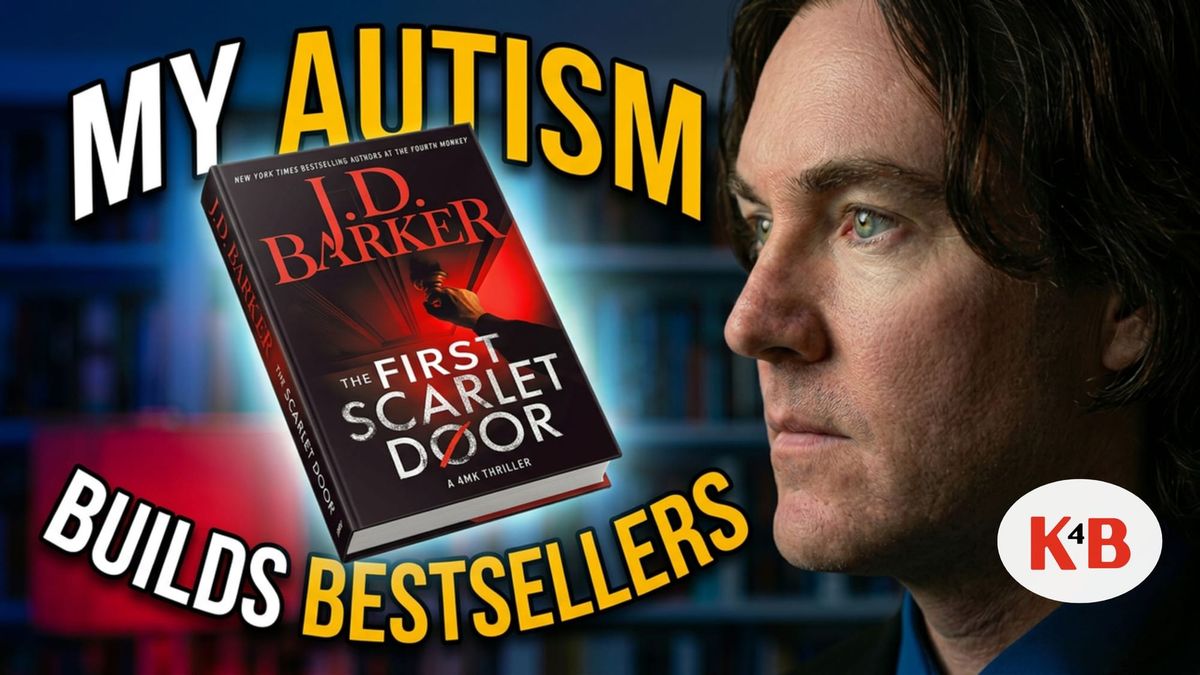
JD Barker has three books releasing in 2026, and a brand strategy behind all of them. In this episode of Knack 4 Business, he breaks down the thinking, the IP decisions, and the long-game relationships that built a NYT bestselling career.

Host: Bernie Franzgrote
NYT bestseller JD Barker joins Knack 4 Business to talk brand strategy, autism, IP deals, and why most entrepreneurs launch too soon. S4E176.
GROWTH CATEGORY: Marketing & Branding
J.D. Barker is having a big year.
Something I Keep Upstairs is out now through Simon & Schuster — a haunted house thriller set on a real island off the New Hampshire coast, where readers can take a boat out and walk through the story in person. The Probability of Murder follows June 2nd. The First Scarlet Door, the first in a new prequel series, arrives September 22nd.
Three books. Three genres. Three different audiences. None of it accidental.
J.D. joined Bernie Franzgrote for his third appearance on Knack 4 Business — and this conversation was the most strategic one yet. It wasn't really about the books. It was about the thinking behind them.
Watch the full conversation here:
WHO THIS IS FOR
SMB owners / Solopreneurs / Corporate escapees / Leaders building systems
If you're building something original in a crowded market, this conversation is for you.
Key Lessons
1. Your difference is your direction.
When J.D. received his autism diagnosis at 22, he made two lists — what it made harder, and what it made easier. He stopped fighting the first list. He doubled down on the second. His ability to research obsessively, work with data deeply, and focus without distraction became the engine behind his writing process. For entrepreneurs, the lesson is the same: the thing that makes you different from everyone else in your market is worth understanding precisely — not managing around.
2. Don't launch until it's genuinely ready.
Four million books were published in English last year. J.D.'s standard is unambiguous: if it's not something a major publisher would back with real money, it needs more work. He watched authors rush to publish, collect glowing reviews from friends, then watch their average rating collapse when real readers arrived. That rating followed them to the next project. Every entrepreneur faces the same pressure to ship before the product is ready. The cost of launching too soon is often higher than the cost of waiting.
3. Diversify your audience on purpose.
When his publisher told him his readership was women 45 and over, J.D. wrote a young adult novel — not to leave his existing audience behind, but to bring a new one in. He calls it being a literary pied piper. Find a segment that isn't in your audience yet. Create something for them. Bring them into the fold. Over time, that's how niche creators become household names. His three 2026 releases — each aimed at a different reader — are that strategy in action.
Practical Steps
- Make your two lists. Write down what your specific strengths make easier than it is for most people. Build your next offer or product around those — not around what the market tells you to do.
- Set a real readiness standard. Before you launch, ask: would someone with serious resources bet on this? If the honest answer is no, identify what's missing and close that gap first.
- Follow up with one old contact this week. J.D.'s Flatliners project started with a conversation from years earlier. Pick one relationship from your past that's worth reconnecting. Do it before the week is out.
About the Guest
J.D. Barker is a New York Times and international bestselling author whose books have been translated into over two dozen languages and sold in more than 150 countries. He has co-written with James Patterson, collaborated with the Bram Stoker estate, and operates his own imprint at Simon & Schuster. Diagnosed with autism at 22, he is also a public advocate for autism awareness and speaks regularly with parents of autistic children.
Three books releasing in 2026:
- Something I Keep Upstairs — out now, Simon & Schuster
- The Probability of Murder — June 2, 2026
- The First Scarlet Door — September 22, 2026
Connect with J.D. at jdbarker.com.
Listen on Audio
FAQ
Q: Do you need to be a writer to get value from this episode? Not at all. J.D. talks about brand strategy, IP ownership, product readiness, and long-game networking. The publishing world is the setting — the business lessons apply anywhere.
Q: What is ghostwriting and can it work as a business model? Ghostwriting is writing in someone else's voice — memoirs, books, scripts — without public credit. J.D. used it early in his career to earn income, learn craft from the inside, and build relationships across industries. For writers and content professionals, it's a legitimate and often lucrative entry point.
Q: How do you protect your intellectual property when licensing to film or TV? J.D. covers this directly in the episode. The short answer: read every page of the contract, know which rights matter most to you, and hold the line on those specifically. He always secures his name on a title card displayed as long as the director's credit. One missed clause cost a fellow author millions — the details matter.
K4B Acknowledgements
Carl Richards
Fred Crouch
Jovan Strika — @Hive
Melanie Webber