Why Carbon Exposure Is the Risk Nobody Sees Coming |Ampresta
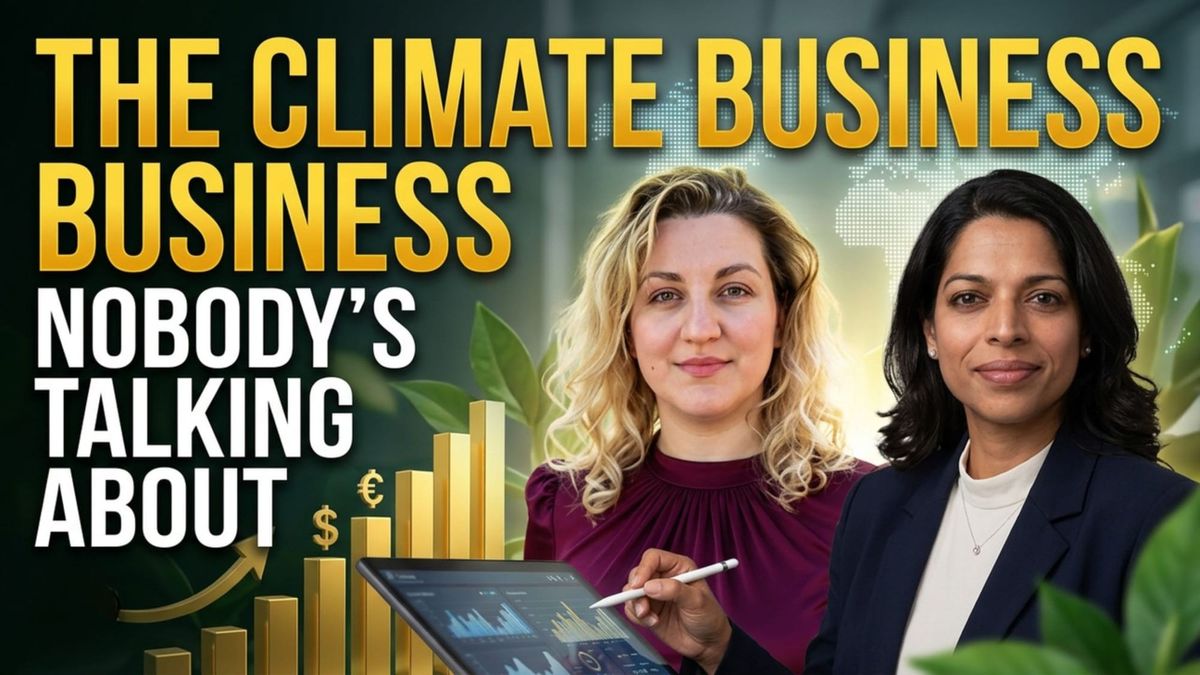
Most balance sheets are missing one number, carbon exposure. Ellza Malok and Nidhi Nikum from Ampresta show business leaders how to turn climate risk into financial intelligence.

Host: Bernie Franzgrote
Ellza Malok and Nidhi Nikum from Ampresta show business leaders how to turn climate exposure into financial intelligence. Knack 4 Business S4E168.
GROWTH PILLAR: Sales & Revenue
Most CFOs are good at managing risk. They track what they can see.
The problem is carbon exposure. It doesn't show up on a traditional balance sheet until it's already a loss — in the form of stranded assets, rising insurance costs, or carbon tax penalties.
Ellza Malok from Ampresta Inc. and Nidhi Nikum, joined the Knack 4 Business podcast to show leaders exactly how to close that gap — before it closes them.
Watch the full conversation here:
WHO THIS IS FOR
SMB owners / Solopreneurs / Asset managers and CFOs / Corporate leaders navigating ESG compliance / Risk professionals building climate-resilient portfolios
Key Lessons
Lesson 1: Climate risk is a fiduciary responsibility — not a sustainability initiative.
The moment climate exposure touches a P&L, it belongs to the CFO. Ellza makes this point clearly: sustainability departments are the first to lose budget when numbers tighten. Putting a dollar figure on climate risk changes who owns it — and who has to act. One real example: an asset manager who learns that three buildings in their portfolio face carbon tax increases of $200K annually will act. The same manager handed a sustainability report will file it.
Lesson 2: The Carbon Performance Scorecard removes the guesswork from real estate portfolios.
Most real estate asset managers know they need to decarbonize their portfolios. Most have no idea where to start. Ampresta's Carbon Performance Scorecard changes that. It analyzes each asset in a portfolio, identifies which buildings carry the highest financial risk from climate exposure, and prioritizes retrofits by return on investment. By 2050, most existing buildings will need to be decarbonized. That means the clock is already running — and prioritization is a financial decision, not a sustainability one.
Lesson 3: Polycrisis is the operating environment most leaders are already navigating — they just don't have a name for it.
Nidhi defines polycrisis as the compounding effect of carbon emissions, resource depletion, and pollution feeding back into each other in ways that make standard planning nearly impossible. The global uncertainty index is currently at record levels. Her solution isn't more reporting. It's decoupling economic activity from emissions — one measurable target at a time — so leaders can move from crisis mode into legacy thinking.
Practical Steps
- Ask the question your next board meeting isn't asking: Does our balance sheet reflect our full climate exposure? If the answer is no or I don't know — that's your starting point.
- Identify your top three real assets — buildings, infrastructure, or supply chain components — and request a baseline carbon footprint assessment for each.
- Start reading stranded asset risk in your sector. The assets that will lose value fastest as carbon taxes increase are already identifiable. Knowing which ones you hold is a financial decision, not an ideological one.
About the Guests
Ellza Malok is the Chief R&D Officer at Ampresta Inc. She studies how behavioral incentives drive high-stakes financial decisions and translates that research into tools business leaders can use. She's the kind of thinker who questions the assumptions everyone else accepts — and builds something better in their place. Connect with Ellza on LinkedIn.
Nidhi Nikum is an Advisor in Climate Risk Intelligence. Her background spans banking, credit risk, and digital transformation inside financial services. She spent years inside institutional lending watching climate risk transmit through balance sheets before most organizations had a name for it. She believes the next 70 years belong to energy — and the companies who get ahead of that now will be the ones still standing. Connect with Nidhi on LinkedIn.
Listen on Audio
Listen on Simplecast
Browse all K4B episodes
- Web Indexer — search every K4B episode by topic
- Join Canada Growth Network — $1 CAD first month, $47/month after
- Gentry Learning podcast: Property Wizard podcast
- Search K4B episodes by topic
- Want to be a guest? Register here
FAQ
What is carbon exposure and why does it matter to my business? Carbon exposure is the financial risk your organization carries from climate-related events and the shift to a low-carbon economy. It shows up through rising insurance costs, stranded assets, regulatory penalties, and energy price volatility. It's already on your balance sheet — most leaders just haven't priced it yet.
What does the Ampresta Carbon Performance Scorecard do? It analyzes your real estate or infrastructure portfolio and tells you which assets carry the highest financial risk from climate exposure. It prioritizes retrofits by ROI, sets short, mid, and long-term targets, and gives CFOs and asset managers a roadmap in financial language — not sustainability language.
What is polycrisis and how does it affect business planning? Polycrisis is the compounding effect of multiple simultaneous crises — carbon emissions, resource depletion, and pollution — feeding each other in ways that make standard forecasting unreliable. For businesses, it means the uncertainty index is unusually high and the cost of inaction is compounding faster than most financial models account for.
K4B Acknowledgements
Carl Richards
Fred Crouch
Jovan Strika — @Hive
Melanie Webber