Why Your Team Has Conversational Debt (And How to Pay It Down)
Leadership coach Steffan Surdek breaks down conversational debt ~ the conversations teams avoid that quietly cost trust and growth ~ and how to start paying it down.

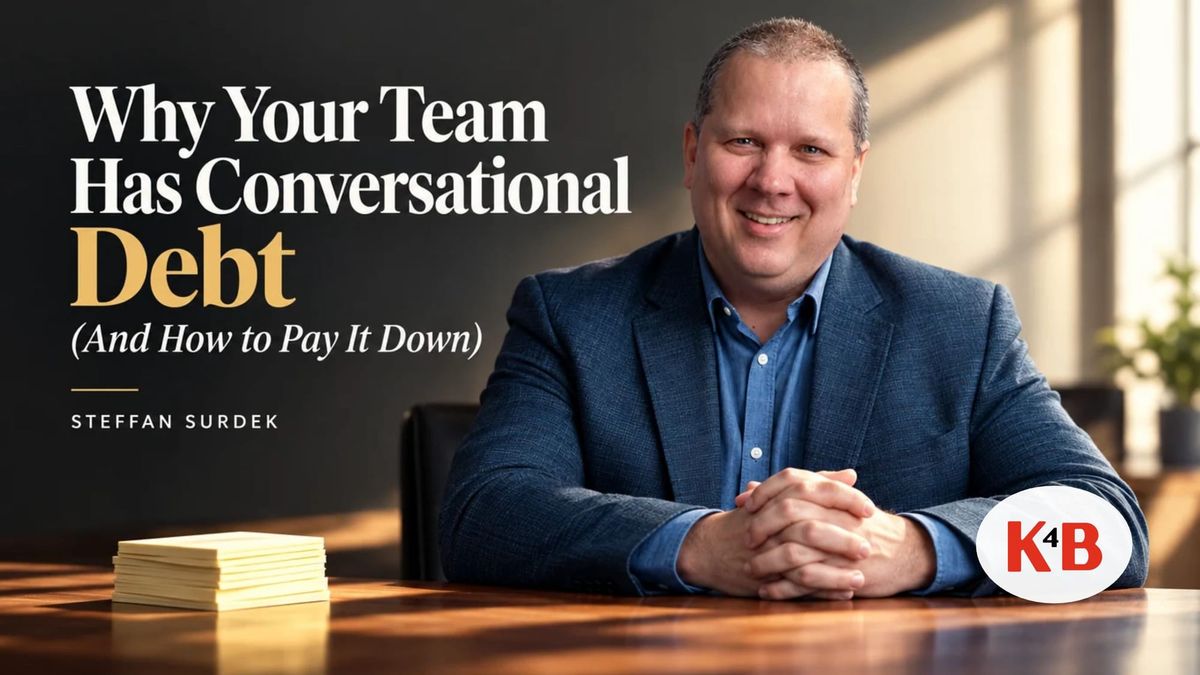
Host: Bernie Franzgrote
Steffan Surdek explains conversational debt ~ the conversations your team avoids that quietly cost trust and growth, and how to pay it down.
GROWTH CATEGORY: Leadership & Ops
Brought to you by Gentry Learning, Profit10, and Web Indexer.

Your team isn’t underperforming because the plan is wrong. It’s underperforming because of the conversation nobody wants to start. That’s quietly expensive ~ and it compounds. Steffan Surdek, a leadership coach who spent eighteen years writing code before he found the real fix, calls it conversational debt.
Steffan Surdek is a leadership coach and the founder of Surdek Solutions in Montreal. He spent eighteen years writing code before he realized the real problems at work need better leadership and communication, not technical fixes. In this episode, he talks with Bernie about conversational debt ~ the conversations teams avoid that quietly damage trust and slow down business growth. He shares how leaders can spot their own blind spots, build trust, and have the hard conversations before they turn into bigger problems. Steffan is the author of The Way of the Co-Creative Leader. This episode is for leaders, managers, and team builders who want a stronger team and real change that sticks.
“Watch the full conversation here:”
Many teams stall because leaders avoid hard conversations, not because their strategy is weak. Leadership coach Steffan Surdek calls this conversational debt ~ unspoken issues that quietly damage trust. Leaders who name the issue early, stay curious instead of accusatory, and have the conversation before it escalates can rebuild trust and keep their teams moving.
Who This Is For
SMB owners / Solopreneurs / Corporate escapees / Leaders building systems
Key Lessons
- Conversational debt builds quietly. A manager who never set clear expectations about meeting punctuality watched frustration spread through the whole team until someone finally snapped.
- Blind spots are a pattern, not a flaw. Steffan looks for hesitation, avoidance, or a story that doesn’t match the facts ~ signals, not character judgments.
- Trust survives honesty, even when it’s awkward. Steffan tells his team they can tell him anything because he won’t overreact ~ even when part of him is freaking out inside.
Practical Steps
- Name the conversation you’ve been avoiding, out loud, this week ~ even if it’s awkward.
- Ask what’s happening instead of saying what you think is wrong. Curiosity opens the door; accusation closes it.
- Build in a regular check-in after any big decision ~ most change efforts fail from silence, not from a bad plan.
About the Guest
Steffan Surdek is the founder of Surdek Solutions ~ a leadership and culture change consultancy helping teams build trust and real, lasting change. Connect: LinkedIn · X · YouTube
Listen on Audio
Listen on Simplecast
Browse all episodes
Partners on this episode
- Gentry Learning Fred Crouch’s real estate education hub: courses, listings, and an Investor Club.
- Profit10 a free 10-question Profit Snapshot showing where your business is leaking profit.
- Web Indexer a chatbot that turns your website into a 24/7 sales assistant.
FAQ
Q: What is conversational debt?
A: It’s the buildup of small, unspoken issues a team avoids talking about. Left alone, it damages trust and slows a team down.
Q: How do I spot my own blind spots as a leader?
A: Get curious instead of certain. Watch for hesitation, avoidance, or a story that doesn’t match the facts ~ those are the signals.
Q: When should I bring in HR?
A: Only after a clear pattern ~ an awareness conversation first, a plan the second time, a clear line the third. HR comes in after that, not instead of it.
- Join Canada Growth Network ~ $47 CDN a robust CRM + Community
- Web Indexer ~ Quick install chatbot. Info 24/7 for visitors ~ install it today
- Browse all episodes (K4B / ETW / CGN)
- Search K4B episodes by topic
- Want to be a guest? Register here