Matching With Funders: What They Aren't Telling You | Anthony Rose
Anthony Rose of SeedLegals has helped 50,000+ startups raise money the smart way. Here's what investors aren't telling founders — and how to protect your equity from day one.

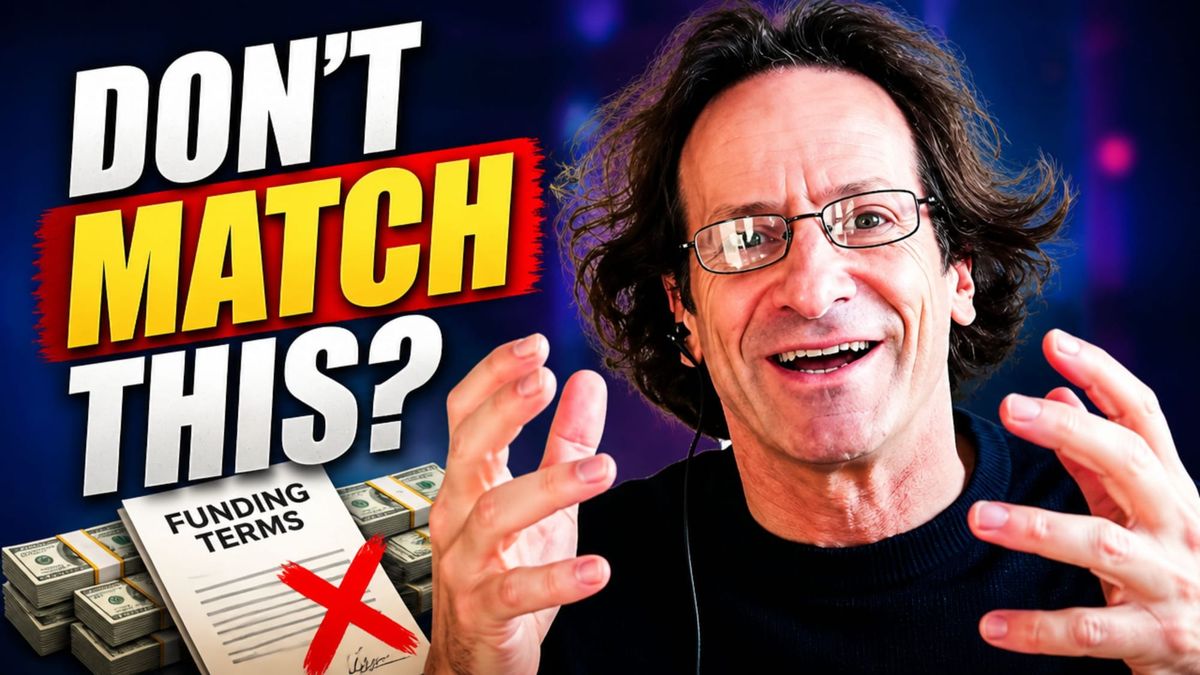
Hosts: Bernie Franzgrote and Wayne Pratt
Anthony Rose of SeedLegals breaks down the legal and funding mistakes that cost founders equity and control. Plain language. Real stakes. K4B Ep. 068.
GROWTH CATEGORY: Leadership & Ops
Most founders don't lose their company in a dramatic boardroom moment.
They lose it in small, early decisions — the ones that felt minor at the time.
Wrong structure. Wrong board seat. Wrong funding terms. By the time they see it, the leverage is already gone.
Anthony Rose has watched it happen more than 50,000 times. He built SeedLegals so founders could stop paying $50,000 in legal fees to figure out what should have been obvious from the start.
If you're thinking about raising capital — or you already are — this is the conversation to have first.
Watch the full conversation here:
WHO THIS IS FOR
Startup founders / SMB owners / Solopreneurs preparing to raise / Corporate escapees building something new / Anyone who has ever googled "how do I raise money for my business"
Key Lessons
1. Your company governance is a pyramid — and most founders don't know where they stand
Anthony describes it simply. The CEO can order a coffee machine without asking anyone. Creating a new subsidiary needs board approval. Selling the company might need investor consent. Certain decisions need a shareholder majority.
If you don't understand where each decision sits on that pyramid, you can end up on the wrong side fast. Founders who let investors dominate the board — or who dilute below 50% equity too early — can find themselves outvoted on decisions about their own companies. Some get replaced entirely.
The fix: keep founders in the majority on the board. Protect your equity percentage through every early funding round. Don't let the structure drift.
2. Advisors and board directors are not the same seat
This is one of the most common and costly mistakes Anthony sees. A founder meets someone impressive — experienced, well-connected, enthusiastic — and puts them on the board.
The problem: board directors have a legal vote. They can block decisions. They can, if they outnumber you, remove you. An advisor gives you input and you can stop calling them any time. A director has standing in your company whether you want them to or not.
Build a separate advisory board. Give advisors stock options for their time. Keep formal board seats tight, founder-controlled, and reserved for people whose vote you would genuinely want on a hard day.
3. Simple legal structure is a competitive advantage
Anthony uses a rental car analogy that makes this click immediately. When you get in a rental car and everything is where you expect it, you just drive. When the manufacturer moved everything around, you sit there confused — and eventually ask for a different car.
Investors see dozens of companies. A standard Delaware C Corp with founders owning shares directly is easy to evaluate. They know what they're looking at. A holding company structure, super-voting shares, or an LLC for a company planning equity raises? That is the car with everything in the wrong place. Most investors don't have time for it — and they don't have to.
Keep it standard. Keep it clean. Make your legal setup the easiest thing in the room, so the conversation can stay on your traction.
Practical Steps
- Map your governance pyramid this week. Write down which decisions you can make alone, which need your board, and which need investor consent. If you can't answer that clearly, you need to fix it before you raise.
- Separate your advisors from your directors. If you have advisors sitting on your formal board right now, consider whether they should be moved to an advisory board instead. Protect your vote count.
- Check your company structure against investor-standard. If you're not a C Corp in the US or a standard Ltd in the UK with founders owning shares directly, talk to a legal platform like SeedLegals before your next raise. Simple is investable.
About Anthony Rose
Anthony Rose is the founder of SeedLegals, the platform that has helped more than 50,000 startups handle funding rounds and legal documents without paying a small fortune to lawyers. Before SeedLegals, he headed up BBC iPlayer — and is widely credited with helping transform the BBC's digital future. He is a serial entrepreneur, a sought-after advisor, and one of the clearest voices in the startup funding world.
Connect with Anthony: LinkedIn | SeedLegals Follow SeedLegals: Facebook | X | Instagram | LinkedIn
Recommended reading: The Mom Test by Rob Fitzpatrick
Listen on Audio
Listen on Simplecast
Browse all K4B episodes
FAQ
Q: What is a SAFE and do I need one? A SAFE — Simple Agreement for Future Equity — is a short document that lets an investor give you money now in exchange for stock later, when you do a priced funding round. Y Combinator created it to replace expensive legal agreements for early-stage raises. If you're raising seed money and want to avoid $50,000 in legal fees, a SAFE is likely your best starting point.
Q: When should a founder stop bootstrapping and start raising? Anthony's data from SeedLegals shows founders put a median of about $35,000 of their own money in first — because no investor funds a PowerPoint. Once you've proven people want what you're building, raising outside capital to grow faster usually makes more sense than spending years of your own life and money doing it alone.
Q: How do I keep control of my company through multiple funding rounds? Two things matter most: keep founders in the majority on your board, and avoid diluting your equity below 50% too early. Don't give investors board seats unless required, and if you do, balance them with more founder seats. Every round, ask: after this, do we still control the board?
K4B Acknowledgements
Carl Richards | Fred Crouch | Jovan Strika — @Hive | Melanie Webber