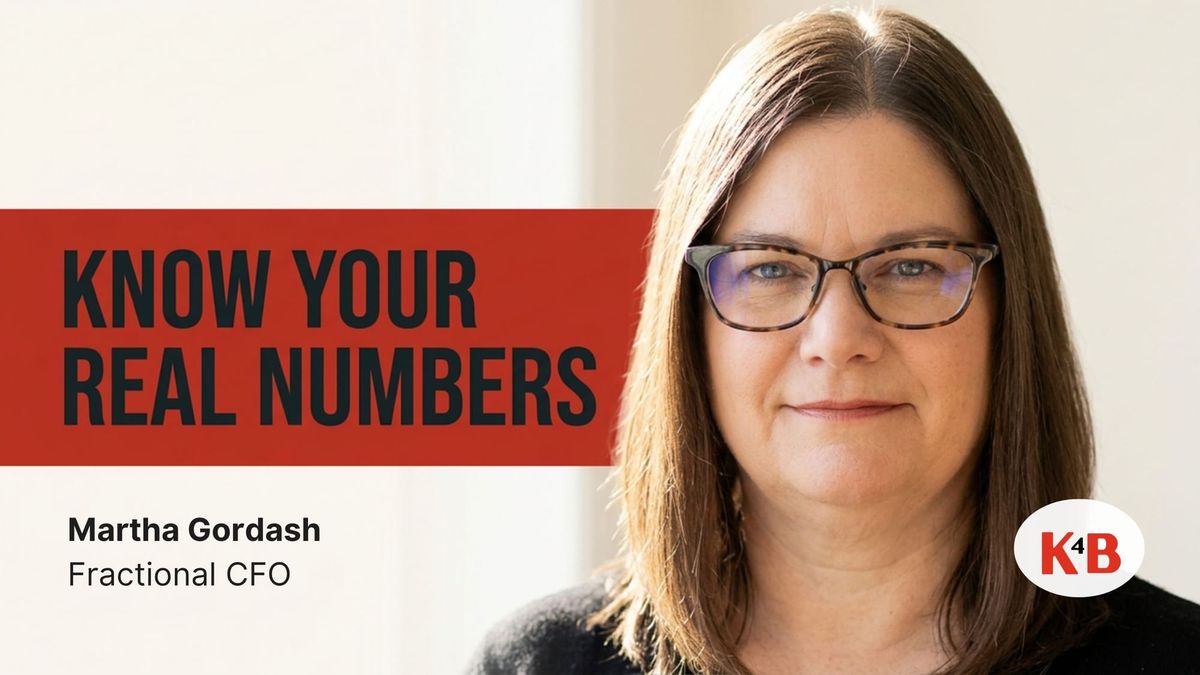
Your Numbers Don't Match Your Reality | Martha Gordash
Fractional CFO Martha Gordash on the four numbers every SMB owner should track weekly. Why volume can't save a bad margin, and what a Progressive Profit System looks like in practice.

Hosts: Bernie Franzgrote and Wayne Pratt
Fractional CFO Martha Gordash on the 4 numbers every Knack 4 Business owner should watch weekly, plus the Progressive Profit System explained.
GROWTH CATEGORY: Leadership & Ops
Brought to you by Canada Growth Network, WebIndexer, and Gentry Learning.
Most owners know their bank balance.
Almost none know their gross margin.
That gap is where profit quietly disappears — and it's exactly the gap fractional CFO Martha Gordash spends her days closing.
Watch the full conversation here:
Who This Is For
SMB owners, solopreneurs, trades-based businesses, corporate escapees, and leaders building financial systems that scale.
Key Lessons
1. Volume is not a profit strategy.
Sell a hundred widgets at a loss and you have a hundred losses. Martha is blunt about it. Owners who chase top-line revenue without watching gross margin end up busier, not richer. Example: a contractor doubling jobs without re-pricing materials can lose money faster than they ever made it.
2. A bookkeeper records. A controller protects. A CFO predicts.
Most owners hire a bookkeeper and think they have a financial team. They don't. The bookkeeper is historical. The controller watches the systems. The CFO is forward-looking. Each role does different work. Owners who don't know the difference often hire the wrong help.
3. Weekly beats monthly. Monthly beats tax time.
A month is enough time to make decisions you can't undo. Martha pushes owners toward a 15-minute weekly review — a simple cadence that catches problems while they're still cheap to fix.
Practical Steps
- Track four numbers every week. Revenue, gross margin, cash position, net profit. Not forty. Four.
- Map the next 12 months of cash out before you call any of the bank balance yours. Debt service, taxes, tech refreshes — those eat what looks like profit.
- Book a 15-minute weekly money meeting. Solo or with a partner. Same time. Same four numbers. Same questions.
About the Guest
Martha Gordash is the founder of Success Profit Planning and a fractional CFO working with small and mid-size businesses across the US. She helps owners stop avoiding their financials and start running a weekly rhythm that turns busy work into real profit. Her signature framework — the Progressive Profit System — moves owners from chaotic to in control across five tailored steps. Connect on LinkedIn.
Listen On Audio
Listen on Simplecast
Browse all episodes
Partners on this episode
- Canada Growth Network — business connections plus CRM for $47 CAD/month
- WebIndexer — turn your website into a 24/7 sales assistant
- Gentry Learning — practical real estate business education for owners who want to lead with clarity
FAQ
Q: What's the difference between a fractional CFO and an accountant?
An accountant records what already happened. A fractional CFO looks forward — strategy, cash flow planning, and the financial decisions that shape the next 12 months. You need both.
Q: How often should I really be looking at my numbers?
Weekly or bi-weekly is ideal for most small businesses. Monthly is too slow — a lot can happen in 30 days, and you can't roll back a bad decision.
Q: I'm a contractor (or dentist, or plumber) — do I need a CFO?
Probably not full-time. But if you don't understand your financial statements, a fractional CFO can show you what each number means and help you make calmer decisions.