Business Crisis Cash Flow Warning Signs | Diesha Cooper
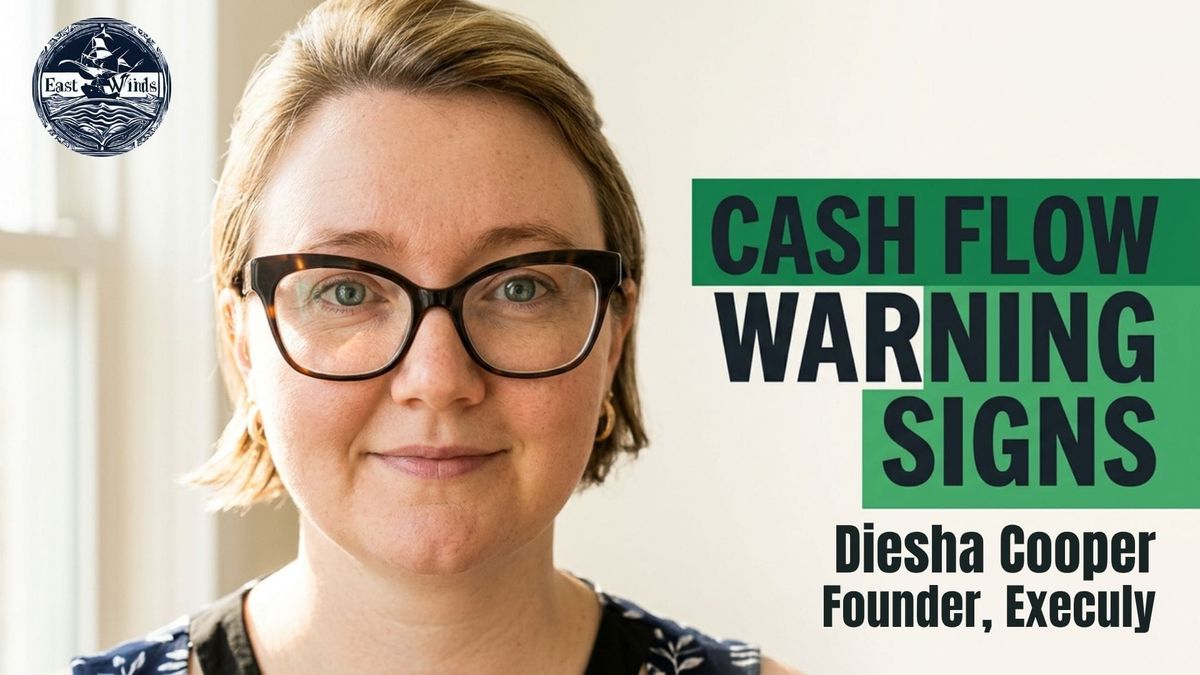
Fractional CFO Diesha Cooper reveals the cash flow warning signs most small business owners miss, and what to fix before it becomes a crisis.

Hosts: Percy Barr, Wayne Pratt and Bernie Franzgrote
Fractional CFO Diesha Cooper shares real cash flow warning signs SMB owners miss before crisis hits. East Trade Winds episode.
GROWTH CATEGORY: Leadership & Ops
Brought to you by East Trade Winds, Profit10, and Canada Growth Network.
Your business can look profitable on paper and still be running out of cash. Diesha Cooper has spent 20 years fixing exactly that problem for small businesses in distress. In this episode, she shows you the warning signs before they become a crisis.
Watch the full conversation here:
WHO THIS IS FOR
SMB owners / Solopreneurs / Corporate escapees / Leaders building systems
KEY LESSONS
Profit and cash are not the same number
Owners running single-member LLCs often take distributions that outpace what the business can actually support. On paper it looks like profit. In the bank account, it's a shortage. Diesha sees this constantly with businesses she's brought in to stabilize.
Pay yourself what the job is worth
A reasonable wage isn't the tax-code minimum — it's what it would cost to hire someone else to do your job, benefits included. Diesha points to $70,000–$80,000 as a realistic small-town benchmark, and notes most US small business owners pay themselves far less while hoping the payoff comes later.
Rebuild the system, don't patch it
When Diesha gets stuck waiting on financial reports from a client's team, she asks a simple question: would I buy this tech stack if I were acquiring the company today? If the answer is no, it's time to rebuild the operating architecture, not keep patching around it.
PRACTICAL STEPS
- Pull your cash position separately from your profit and loss statement this week — don't rely on net income alone to judge business health.
- Calculate what it would cost to hire a replacement for your own role, including benefits, and compare that to what you're actually paying yourself.
- List one tool or process in your business you wouldn't "buy" if you were acquiring the company today, and start planning its replacement.
ABOUT THE GUEST
Diesha Cooper helps small and mid-sized businesses in financial distress get stable again. She works with companies from $1 million to $20 million in revenue, stepping in as a fractional CFO and COO when cash flow has stalled and leadership needs hands-on support. She cares about this work because she's lived it — she bought out her own family's industrial business at 28 and turned it around within four months. Connect with her on LinkedIn or visit Execuly.
LISTEN ON AUDIO
Listen on Simplecast
Browse all episodes
Partners on this episode
- East Trade Winds — free weekly networking, community first, sales second
- Profit10 — take the free Profit Snapshot and see where your business is leaking
- Canada Growth Network — business connections + CRM, $47/month
FAQ
How do I know if my business has a cash flow problem, not just a profit problem?
Check your bank balance trend separately from your net income. If profit looks fine but cash keeps shrinking, distributions or timing issues are likely the cause.
What's a reasonable wage to pay myself as an owner?
Price out what it would cost to hire a replacement for your role, benefits included. That number — not the tax minimum — is your baseline.
When should I rebuild my operating systems instead of patching them?
If you wouldn't buy your current tech stack or processes as an outside investor, it's a sign the foundation needs rebuilding, not another patch.
- Join Canada Growth Network for $47 CDN/m with CRM
- Web Indexer for your webpage search & booking
- Browse all episodes (K4B / ETW / CGN)
- Join East Trade Winds free — Tuesdays 8–9 AM EST