Your Processes Are Broken (Here's Why) | Fran Strickland
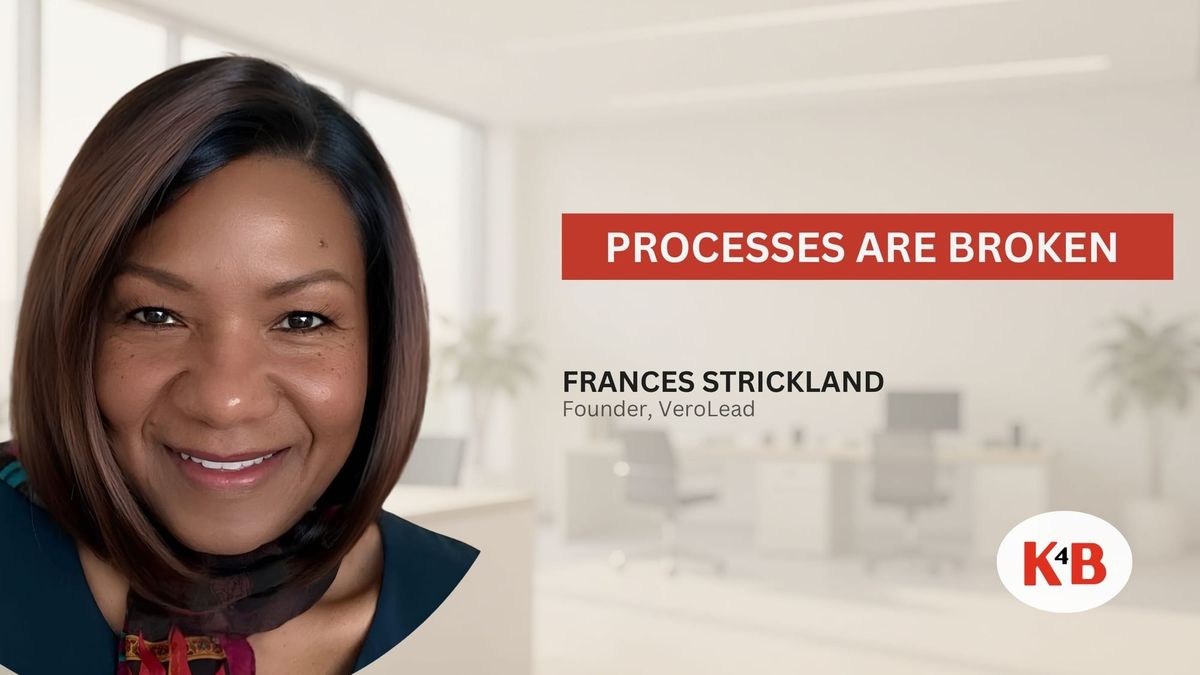
Frances Strickland of VeroLead on why chaos is a signal of broken systems; and how structure, leadership, and flow turn unpredictable revenue into predictable profit

Hosts: Bernie Franzgrote and Wayne Pratt
Frances Strickland of VeroLead on Knack 4 Business: chaos, cash flow timing, and the three levers behind predictable profit for SMB owners.
GROWTH CATEGORY: Leadership & Ops
Brought to you by Profit10™, Canada Growth Network, and WebIndexer.
Why does your business feel chaotic even when you are working nonstop?
Frances Strickland has a clear answer. Chaos isn't a badge of honour. It's a signal, your structure, leadership, or flow is broken. Get those three right and profit stops being a surprise.
Watch the full conversation here:
Who this is for
SMB owners, solopreneurs, corporate escapees, and leaders building systems.
Key Lessons
1. Chaos is a nervous system response, not a leadership style.
Frances was direct about this. Chaos triggers cortisol — fight, flight, or freeze. Stay at that activation level long enough and your decision quality drops. The owner who is "always on" isn't heroic. They're chemically compromised. She told the story of her own rapid heartbeat that sent her to the ER after she walked into a new role without a moment to land. Her body told her what her calendar wouldn't.
2. Cash flow is almost always a timing problem.
If your clients pay in 90 days and your vendors get paid in 30, you don't have a revenue gap. You have a timing gap. Frances walks owners through small weekly habits — what was forecasted, what came in, what the gap means — that turn money surprises into signals you can plan around.
3. The ham story explains why so many businesses break.
A wife cuts the end off every ham before baking. She learned it from her mother, who learned it from her grandmother, whose pot was too small. Three generations later, nobody can explain the habit. Most owner-run businesses operate exactly like this. The owner knows how to put the wheels on the bike, but it's all in their head. The day they're not there, the business stops.
Practical Steps
- Keep a notebook this week. Write down the steps you take inside one repeated task — a sales call, an invoicing cycle, an onboarding. The point isn't perfection. It's getting the process out of your head and onto a page where someone else can see it.
- Audit your money timing. Look at the average days between invoice sent and money received. Compare that to your average vendor terms. If client terms are longer than vendor terms, you have a timing problem hiding inside a revenue picture.
- Pick one yes-but you keep telling yourself. Frances fired a client for saying it three months in a row. Notice which suggestion you keep dodging. That's usually the one with the most leverage.
About the Guest
Frances Strickland is the founder of VeroLead, a profitability strategist with more than 30 years of senior corporate experience across supply chain, HR, and plant management — including joint ventures in 17 different markets. She helps SMB owners, executives, and senior operators reset how their business runs — simplifying structure, tightening execution, and removing friction so profit becomes predictable. Connect with her on LinkedIn or take her Profit Pulse self-assessment.
Listen on Audio
Listen on Simplecast
Browse all episodes
Partners on this episode
- Profit10™ — a free ten-question Snapshot that shows you where your business is leaking profit. Take the free Profit Snapshot.
- Canada Growth Network — business community plus CRM for $47 CAD a month
- WebIndexer — turns your website into a 24/7 client-facing assistant. See it live on knack4business.com.
FAQ
What does Frances Strickland mean by "profit predictability"?
Profit predictability is what happens when structure, leadership, and flow are aligned. Small weekly habits — forecasting, reviewing gaps, planning around timing — replace the surprise-and-react cycle most owners live in.
How is cash flow a timing problem and not a revenue problem?
When client payment terms (90, 120, even 180 days) are longer than vendor payment terms (usually 30), the business runs out of cash even when revenue is fine. The fix is timing, not selling more.
What is the Profit Pulse self-assessment?
A self-scoring assessment Frances built so owners can see where structure, leadership, and flow are affecting their profitability — at the stage of business they're actually in. Free to take.
- Join Canada Growth Network - comes with CRM
- Web Indexer - search for other podcasts with our web bot!
- Search K4B episodes by topic
- Want to be a guest? Register here