Consistency & Character: The Only Way to Build Real Authority
Most leadership books hand you 21 things. Your brain holds four. Jim Salvucci on the Four Cs framework that actually fits.

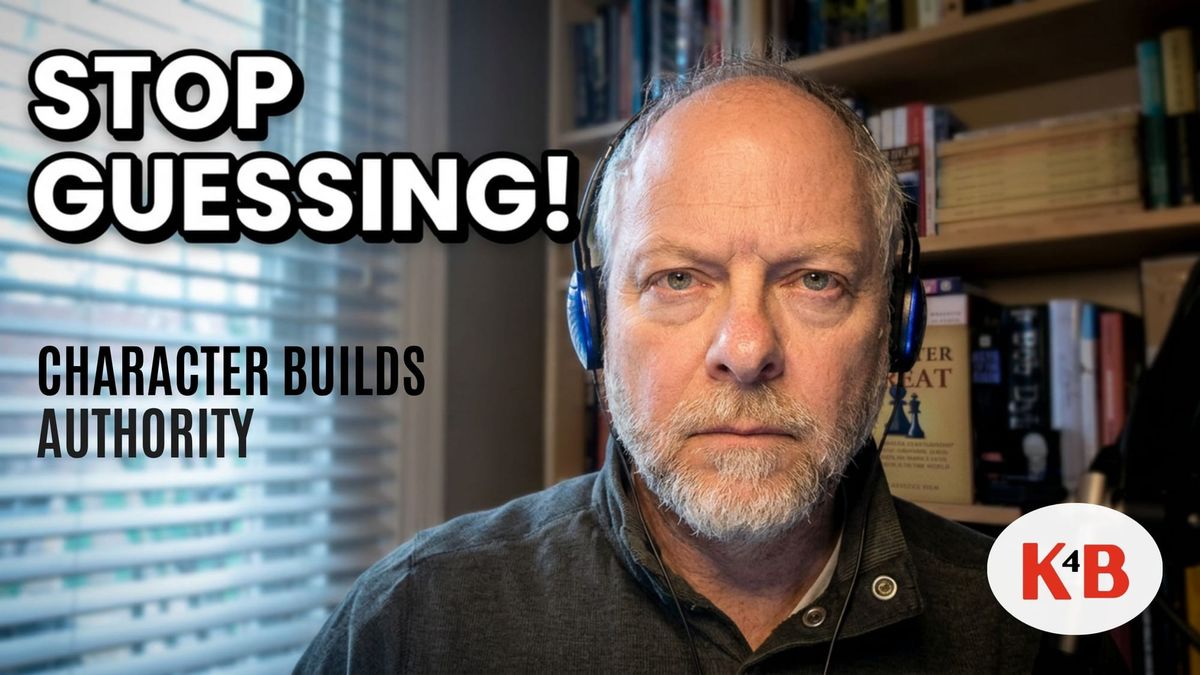
Hosts: Bernie Franzgrote and Wayne Pratt
GROWTH CATEGORY: Leadership & Ops
Most leadership books open with a list of 21 things to remember. Your brain holds four. That is the problem Jim Salvucci set out to fix when he built the Four Cs.
Jim spent 30 years in higher education as an English professor, dean, and university vice president. He has watched smart people stumble in leadership roles because they treated the job like a recipe. The Four Cs are not a recipe. They are a diagnostic.
Watch the full conversation here:
WHO THIS IS FOR
SMB owners. Solopreneurs. Corporate escapees. Leaders building systems for a team for the first time.
KEY LESSONS
Lesson 1 — Character is the foundation, not a soft skill
If your team does not trust who you are, nothing else lands. Jim uses the boy who cried wolf to make the point. By the third "wolf," the villagers stay put. They have learned the boy has no character. His message has no value.
The same rule applies in your business. The strategy memo lands flat if the person sending it has not earned trust over time. Character has to be built first, and then maintained through self-assessment.
Lesson 2 — Communication is message, audience, and clarity
Jim breaks communication into three pieces. Your message has to mean something. Your audience has to be ready to hear it. And clarity beats everything else.
Jim's old rule for his students applies to every leader: it is not the receiver's job to fill in your blanks. If you are not clear, you are not communicating.
Lesson 3 — Compromise is strength, not weakness
This is where most leaders flinch. The Western-movie ethos says compromise is for the weak. Jim disagrees. Compromise is the only way two people who disagree can keep moving forward. The one thing you never compromise: your values.
The boss who refuses to compromise is not a leader. They are a bully. Or they are getting bullied. One or the other.
PRACTICAL STEPS
- Pick the weakest C. Look at your team this week. Where is the friction coming from? If trust is shaky, work on character. If trust is solid but nothing moves, look at compromise.
- Run one self-assessment. Write down three behaviours you want your team to see in you. Then ask one trusted person whether they actually see them. That gap is your work.
- Start one tiny habit. Pick one leadership behaviour you want to build — listening, asking better questions, giving more direct feedback. Make the first version of it laughably small. Anchor it to something you already do. Celebrate the win every time.
ABOUT THE GUEST
Jim Salvucci is the founder of Guidance for Greatness. He spent 30 years in higher education as an English professor, dean, and university vice president before moving full-time into leadership coaching. He helps leaders cut through the noise, find their real mission, and turn it into decisive action. Jim is the author of Greater Than Great and writes the On Leading with Greatness Substack. He is also a certified Tiny Habits coach.
Connect with Jim: LinkedIn | Substack | YouTube
LISTEN ON AUDIO
Listen on Simplecast
Browse all episodes
FAQ
Q: What are the Four Cs of leadership? Character, communication, compromise, and collaboration. They are progressive — each one builds on the one before it.
Q: Is the Four Cs framework based on research? It draws on Jim's 30 years in higher education leadership, plus work in behaviour science through his Tiny Habits coaching certification with Dr. BJ Fogg at Stanford.
Q: What is the difference between a boss and a leader? A boss has a title. A leader teaches, listens, and stays accountable to the people they are responsible for. Jim's line: if you don't have time to teach, you don't have time to lead.
K4B ACKNOWLEDGEMENTS
Carl Richards
Fred Crouch
Jovan Strika — @Hive
Melanie Webber