The Red Flags In Syndication Deals | K4B
Wayne Courreges III reveals what every passive investor must check before committing capital to a syndication deal — and the red flags that should stop you cold.

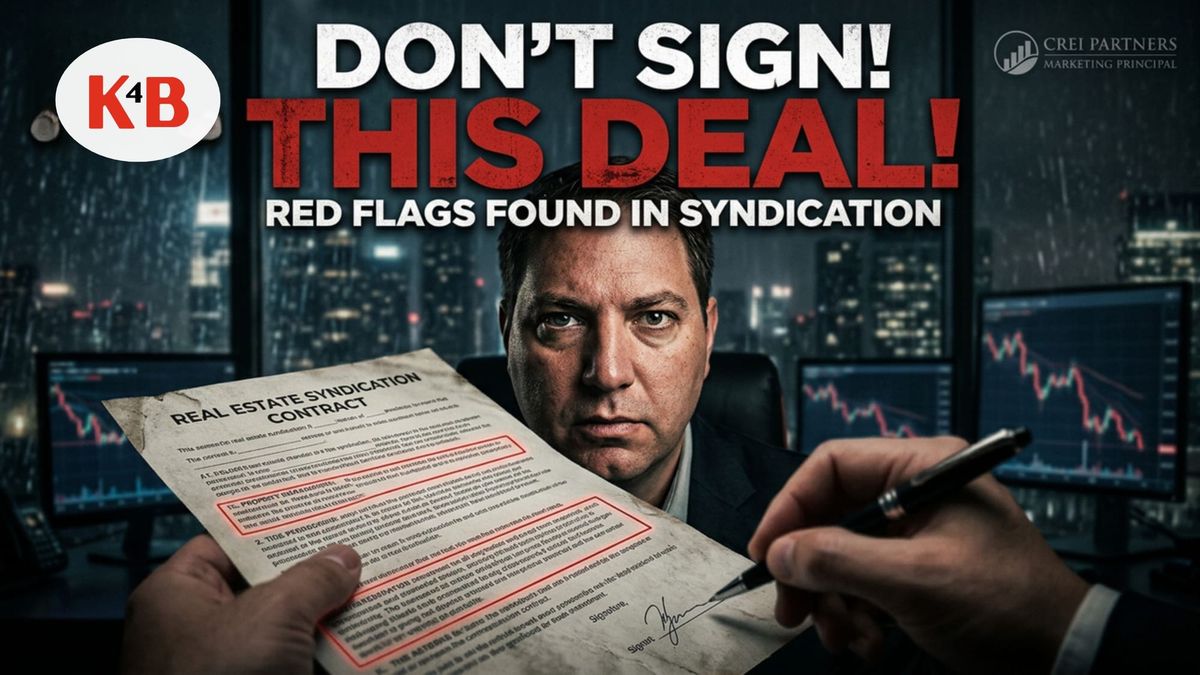
Hosts: Bernie Franzgrote & Wayne Pratt
Wayne Courreges III reveals what every accredited investor must check before committing capital to a real estate syndication — Knack 4 Business S4 E060.
GROWTH CATEGORY: Real Estate
Most investors never see the red flags until after they've wired the money. By then, the hard part is done — and so is their leverage. Wayne Courreges III has managed commercial real estate deals worth over $60 million. He knows exactly where deals go wrong, and it's rarely the property itself. It's the process investors skip before they sign.
Watch the full conversation here:
Who This Is For
SMB owners / Solopreneurs / Corporate escapees / Leaders building systems — particularly those who are accredited investors or actively working toward that threshold.
Key Lessons
1. The jockey matters more than the horse.
A strong deal with a weak operator is a bad investment. Wayne is direct about this: over a five-year hold period, the person managing your capital is the variable that matters most. Before you commit, verify their track record. Ask how they communicated with investors during past downturns. Check whether they have a real investor portal — not just a quarterly email. If you can't get clear answers to those questions, the deal doesn't matter. Walk away from the jockey before you ever evaluate the horse.
2. Read the legal documents — not the marketing material.
Every syndication comes with three documents that govern your investment: the private placement memorandum, the subscription agreement, and the company agreement. Wayne's advice is simple — spend time on those, not the pitch deck. The marketing material tells you the upside story. The PPM tells you the actual risk, the actual structure, and the actual terms. Have a real estate attorney review these before you sign. Have a tax strategist review the deal structure alongside them. These are two different professionals from your general accountant, and both matter at this level.
3. Tax strategy is the lever most passive investors ignore.
Under current US bonus depreciation rules, a $100,000 investment in a commercial real estate syndication can generate up to $70,000 in K-1 passive paper losses. Those losses offset passive income legally — meaning a high-income professional can reduce their tax burden significantly while their capital compounds inside a physical asset. Wayne recommends bringing on a tax strategist before your first deal. Not after. The strategy has to be part of the structure from the start to work properly.
Practical Steps
- Start your education first. Visit Passive Investor Coaching — Wayne's free five-hour resource that covers how to evaluate deals, vet sponsors, and ask the right questions. No sales pitch.
- Build your advisory team before you invest. You need a real estate attorney and a tax strategist in place before you review any PPM. Line them up now, not when a deal lands in your inbox.
- Download the free eBook. The CREI Partners eBook covers passive investing fundamentals — a solid starting point if syndications are new to you.
About the Guest
Wayne Courreges III is the Managing Partner at CREI Partners, a Texas-based commercial real estate investment firm. He helps busy professionals — doctors, executives, and high-income earners — build generational wealth through passive real estate syndications. Wayne began his real estate journey during his service as a US Marine Corps Corporal, spent 16 years managing institutional assets globally at CBRE, and founded CREI Partners in 2019. His firm acquires apartment communities and storage assets in markets with strong economic fundamentals across Texas, Louisiana, and Alabama. Connect with Wayne on LinkedIn or reach him directly at creipartners.com.
Listen on Audio
- Web Indexer — search any K4B episode by topic in seconds
- Join Canada Growth Network — real tools, real connections, $47/month CAD
- Gentry Learning podcast: Property Wizard Podcast
- Search K4B episodes by topic
- Want to be a guest? Register here
FAQ
Q: Can Canadians invest in US-based real estate syndications? Yes. Wayne confirmed that Canadian investors can participate in US syndications under the right structure. The key is working with advisors — a cross-border tax strategist and a real estate attorney familiar with both jurisdictions — before committing capital.
Q: What is a private placement memorandum and why does it matter? A PPM is the legal document that governs a syndication deal. It outlines the risks, the investment structure, the terms, and the rights of limited partners. It is more important than any marketing material the sponsor provides. Wayne recommends having a real estate attorney review it before signing anything.
Q: How does bonus depreciation work in a real estate syndication? When a commercial property is purchased, improvements to the asset — not the land itself — can be depreciated. Under current US tax law, investors may receive up to 70–100% of their investment value back as passive paper losses via K-1 documents. These losses offset passive income, reducing tax burden legally over the hold period.
K4B Acknowledgements
Carl Richards
Fred Crouch
Jovan Strika — @Hive
Melanie Webber